



5-HT Receptor
Serotonin Receptor; 5-hydroxytryptamine Receptor
5-HT receptors (Serotonin receptors) are a group of G protein-coupled receptors (GPCRs) and ligand-gated ion channels (LGICs) found in the central and peripheral nervous systems. Type: 5-HT1, 5-HT2, 5-HT3, 5-HT4, 5-HT5, 5-HT6, 5-HT7. They mediate both excitatory and inhibitory neurotransmission. The serotonin receptors are activated by the neurotransmitter serotonin, which acts as their natural ligand. The serotonin receptors modulate the release of many neurotransmitters, as well as many hormones. The serotonin receptors influence various biological and neurological processes such as aggression, anxiety, appetite, cognition, learning, memory, mood, nausea, sleep, andthermoregulation. The serotonin receptors are the target of a variety of pharmaceutical drugs, including many antidepressants, antipsychotics, anorectics,antiemetics, gastroprokinetic agents, antimigraine agents, hallucinogens, and entactogens.
5-HT Receptor Isoform Specific Products
-
5-HT Receptor
(557)
View all products
-
5-HT1 Receptor
(454)
View all products
-
5-HT2 Receptor
(475)
View all products
-
5-HT3 Receptor
(31)
View all products
-
5-HT4 Receptor
(16)
View all products
-
5-HT5 Receptor
(13)
View all products
-
5-HT6 Receptor
(86)
View all products
-
5-HT7 Receptor
(88)
View all products
All Product Categories
-
5-HT Receptor Inhibitors
(193)
View all products
-
5-HT Receptor Agonists
(545)
View all products
-
5-HT Receptor Antagonists
(679)
View all products
-
5-HT Receptor Activators
(18)
View all products
-
5-HT Receptor Modulators
(95)
View all products
-
5-HT Receptor Inducers
(2)
View all products
-
5-HT Receptor Controls
(19)
View all products
-
5-HT Receptor Ligands
(30)
View all products
-
5-HT Receptor Related Products (1728)
Related Products (1728)

-
Antibodies (1)
-
Related Compound Screening Libraries (1)
-
5-HT Receptor Isoform Comparison
-
Sumatriptan-d6
 0 ImagesCat. No.: HY-B0121BS1CAS No.: 1020764-38-8Synonyms: GR 43175 free base-d6Sumatriptan-d6 is the deuterium labeled Sumatriptan. Sumatriptan is an orally active 5-HT1 receptor agonist with Kis of 17 nM, 27 nM and 100 nM for 5-HT1D, 5-HT1B and 5-HT1A receptors, respectively. Sumatriptan can be used for migraine headache research.
-
Mosapride-d5
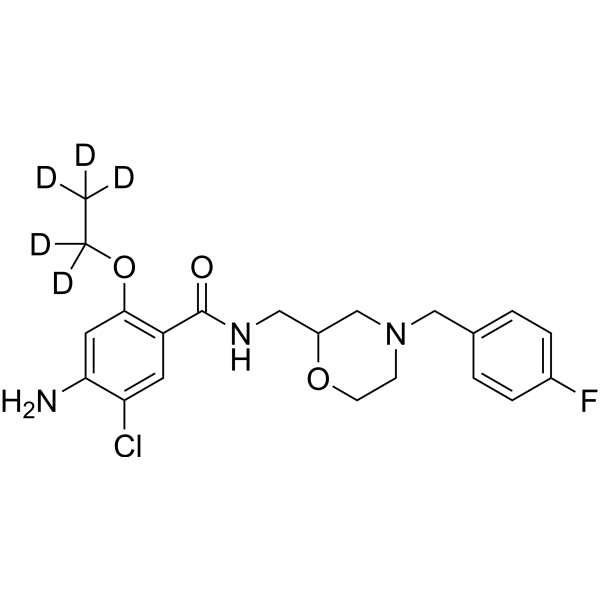 0 ImagesCat. No.: HY-B0189S1CAS No.: 1246820-66-5Mosapride-d5 is the deuterium labeled Mosapride. Mosapride is a gastroprokinetic agent that acts as a selective 5HT4 agonist.
-
RS 2232
 0 ImagesCat. No.: HY-123129CAS No.: 85073-83-2RS 2232 is an orally active, competitive 5-HT deamination inhibitor with a Ki of 0.054 μM. RS-2232 exhibits reversible and specific inhibition of type A monoamine oxidase. RS 2232 can be used in brain research.
-
BP 554
 0 ImagesCat. No.: HY-123207CAS No.: 82900-57-0BP 554 is a selective 5-HT1A receptor agonist and Piperazine derivative. BP 554 leads to hypothermia.
-
Dolasetron Mesylate hydrate (Standard)
 0 ImagesCat. No.: HY-B0750BRCAS No.: 878143-33-0Synonyms: MDL-73147EF hydrate (Standard)Dolasetron Mesylate hydrate (MDL-73147EF hydrate) (Standard) is the analytical standard of Dolasetron Mesylate hydrate (HY-B0750B). This product is intended for research and analytical applications. Dolasetron Mesylate hydrate is a serotonin 5-HT3 receptor antagonist used to treat nausea and vomiting following chemotherapy.
-
RPI-GLYT2-82
 0 ImagesCat. No.: HY-181977Purity: 99.12%RPI-GLYT2-82 is a reversible, blood-brain barrier-permeable allosteric inhibitor of GlyT2 with an IC50 value of 554 nM. RPI-GLYT2-82 also exhibits inhibitory activity against 5-HT2AR and SERT, with IC50 values of 1.9 μM and 4.7 μM, respectively. RPI-GLYT2-82 inhibits pain signals and alleviates allodynia, shows no target-related side effects at the maximum analgesic dose, and has no addictive potential. RPI-GLYT2-82 can be used for the research of neuropathic pain.
-
RS-30199
 0 ImagesCat. No.: HY-167238CAS No.: 123882-60-0RS-30199 is an anxiogenic agent. RS-30199 interacts with the 5-HT1A receptor. RS-30199 prolongs intromission latency. RS-30199 fully inhibits the facilitation of sexual behaviour caused by Delequamine (HY-106874).
-
5-Chloro-α-methyltryptamine
 0 Images5-Chloro-α-methyltryptamine (Compound 7b) is a potent and selective dual DA/5-HT releaser and 5-HT2a agonist. 5-Chloro-α-methyltryptamine releases DA and 5-HT with the EC50 values of 54.3 nM and 16.2 nM, respectively. 5-Chloro-α-methyltryptamine can be used in the study of neurotransmitter.
-
Tegaserod-13C,d3 maleate
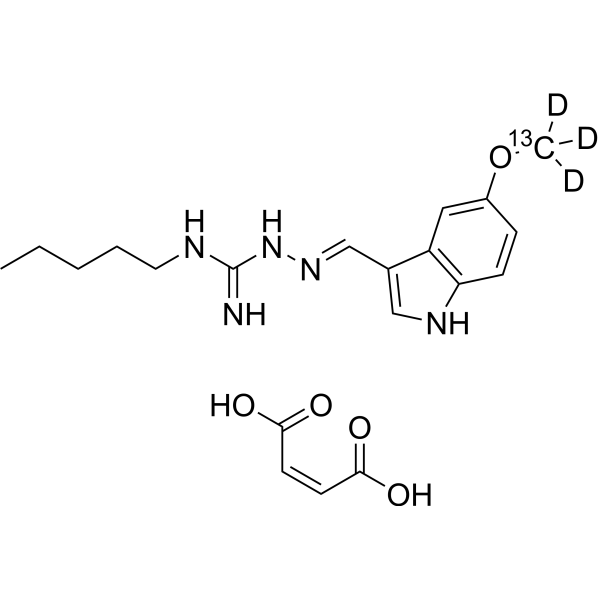 0 ImagesCat. No.: HY-14153ASSynonyms: SDZ-HTF-919-13C,d3; HTF-919-13C,d3Tegaserod-13C,d3 (maleate) is the 13C- and deuterium labeled Tegaserod (maleate). Tegaserod maleate is a selective 5-HT4 receptor partial agonist and a 5-HT2B receptor antagonist. Tegaserod maleate exhibits a promotile effect throughout the gastrointestinal (GI) tract.
-
MS 245 oxalate
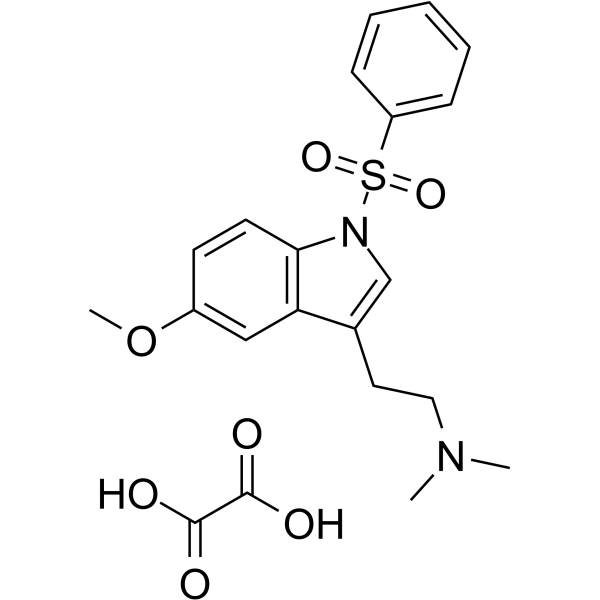 0 ImagesCat. No.: HY-103113CAS No.: 275363-58-1MS 245 oxalate is a potent antagonist of 5-HT6 receptor with a Ki of 2 nM.
-
5-HT2C agonist-12
 0 ImagesCat. No.: HY-180465CAS No.: 616201-56-05-HT2C agonist-12 (example.2) is a selective and orally active 5-HT2C receptor agonist. 5-HT2C agonist-12 can inhibit the accumulation of IP3 with an IC50 of 4.5 nM. 5-HT2C agonist-12 can induce a feeling of fullness, shorten the time of eating, and reduce calorie intake. 5-HT2C agonist-12 can be used for the research of obesity.
-
Ifoxetine
 0 ImagesCat. No.: HY-108973ACAS No.: 66208-11-5Synonyms: CGP-15210GIfoxetine (CGP 15210G) is an inhibitor of 5-HT reuptake. Ifoxetine specifically and selectively blocks the 5-HT reuptake in the brain without affecting the 5-HT uptake processes in the periphery (blood platelets). Ifoxetine inhibits the uptake of radiolabelled 5-HT into rat brain synaptosomes in vitro or ex vivo. Ifoxetine has antidepressant properties.
-
RU 24969 hemisuccinate
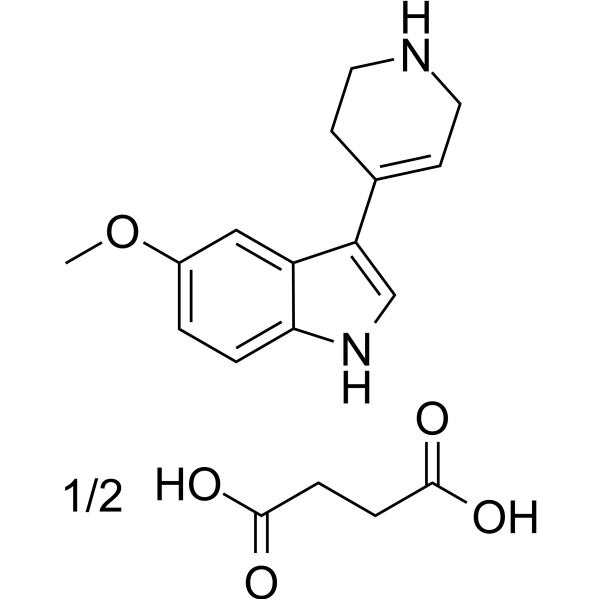 0 ImagesCat. No.: HY-16688BCAS No.: 66611-27-6RU 24969 hemisuccinate is a preferential 5-HT1B agonist, with a Ki of 0.38 nM, but also displays appreciable affinity for the 5-HT1A receptor (Ki=2.5 nM), and has low affinity for other receptor sites in the brain. RU 24969 hemisuccinate could decrease fluid consumption and increase forward locomotion.
-
GR-4991W93
 0 ImagesCat. No.: HY-19252CAS No.: 171549-56-7GR-4991W93 is an orally active partial agonist against 5HT1B/1D receptor, with pIC50 values of 6.95 and 7.80 against 5HT1B and 5HT1D, respectively. GR-4991W93 demonstrates potent inhibition of electrically evoked plasma extravasation in the guinea pig. GR-4991W93 can be used for migraine research.
-
(-)-OSU6162 hydrochloride
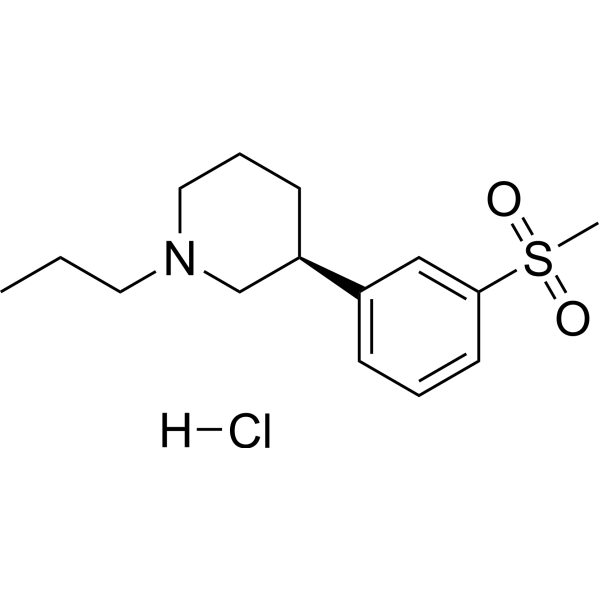 0 ImagesCat. No.: HY-103403CAS No.: 156907-84-5Synonyms: PNU96391 hydrochloride(-)-OSU6162 (PNU96391) hydrochloride is a dopamine stabilizer. (-)-OSU6162 hydrochloride acts as partial agonist at 5-HT2A and is a dopamine D2 antagonist. (-)-OSU6162 hydrochloride can be used for the research of aggression and irritability.
-
5-HT2C agonist-3 free base
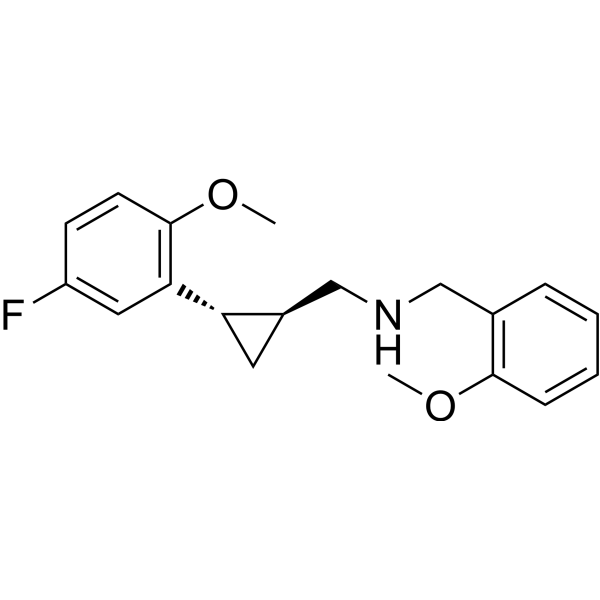 0 ImagesCat. No.: HY-156532ACAS No.: 2104810-17-35-HT2C agonist-3 ((+)-19) free base is a selective 5-HT2C agonist (EC50: 24 nM, Ki: 78 nM). 5-HT2C agonist-3 free base has antipsychotic drug-like activity. 5-HT2C agonist-3 free base blocks Amphetamine-induced hyperactivity.
-
Anpirtoline
 0 ImagesCat. No.: HY-101100ACAS No.: 98330-05-3Synonyms: D-16949Anpirtoline (D-16949) is a centrally acting 5-HT1B receptor agonist, with Kis of 28 nM (5-HT1B), 150 nM (5-HT1A) and 1.49 μM (5-HT2). Anpirtoline has serotonergic, antinociceptive, antidepressant-like effects.
-
DV-7028 hydrochloride
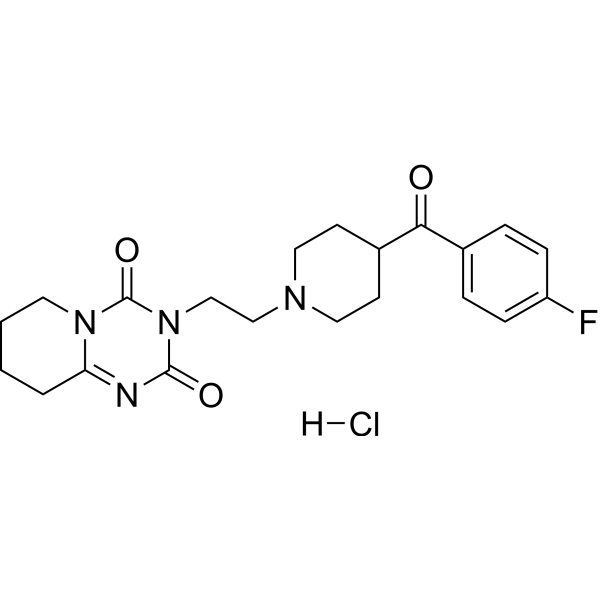 0 ImagesCat. No.: HY-103116CAS No.: 133364-62-2DV-7028 is a selective 5-hydroxytryptamine2 (5-HT2) receptor antagonist.
-
PF-03382792
 0 ImagesPF-03382792 is a potent 5-HT4 partial agonist with a Ki of 2.7 nM and an EC50 of 0.9 nM for 5-HT4d. PF-03382792 can penetrate the brain. PF-03382792 produces moderate increases in cortical Ach in the rat prefrontal cortex.
-
LY 367265
 0 ImagesCat. No.: HY-156807CAS No.: 210751-39-6LY 367265 is a 5-hydroxytryptamine transporter (SERT) inhibitor (IC₅₀ = 3.1 nM) and a 5-HT₂A receptor antagonist (Kᵢ = 0.81 nM). LY 367265 has the inhibitory activity on the norepinephrine transporter (NET) of extremely weak (IC₅₀ > 1000 nM); it has low affinity for subtypes such as 5-HT₁B (Kᵢ = 490 nM) and 5-HT₁D (Kᵢ = 81 nM), showing high selectivity. LY 367265 concentration-dependently enhances of [³H]5-HT efflux (EC₅₀ = 250 nM). LY 367265 antagonizes the contraction response of Sumatriptan (HY-B0121B), indicating its functional antagonistic activity on 5-HT₁D-like receptors. LY 367265 can be used for the study of diseases such as anxiety disorders and post-traumatic stress disorder.




